


Industry wide manufactures are experiencing premature gas valve failure. One major reason for this is Home depressurization which allows condensate from the intake pipe to drip onto the gas valve. This causes corrosion and rust on the valve and other components in the furnace. This will generally happen during the cooling season however, the failed gas valve isnt usually discovered until the next heating season.
Condensation dripping from the combustion air pipe in a direct vent (2-pipe) configuration can be an indication of one or more of the following problems. Please make a reasonable effort to correct the following conditions:
1) Home depressurization (improper ventilation) and unsealed furnace cabinet.
2) Improper vent and combustion air system design and/or termination location.
3) Unapproved holes in the blower shelf or furnace cabinet.
4) Unbalanced duct system.
Condensation dripping from the suction line is an indicator that the suction line is not sealed to the evaporator coil cabinet or insulated as required.
Condensation Caused by Depressurization
Condensation can form inside the combustion air pipe during cooling season. Advances in home construction have resulted in low leakage home envelopes. Inadequate ventilation of low leakage homes causes depressurization, where the interior pressure is lower than outside. Under this condition, the house draws hot and humid outdoor air through bathroom/kitchen/dryer vents and combustion air intakes into conditioned spaces. When outdoor air reaches the cooler, conditioned air, condensation forms. Homes should be slightly pressurized per ASHRAE 62.1 “Ventilation for Acceptable Indoor Air Quality”. A slight positive pressure limits entrance of outdoor moisture.
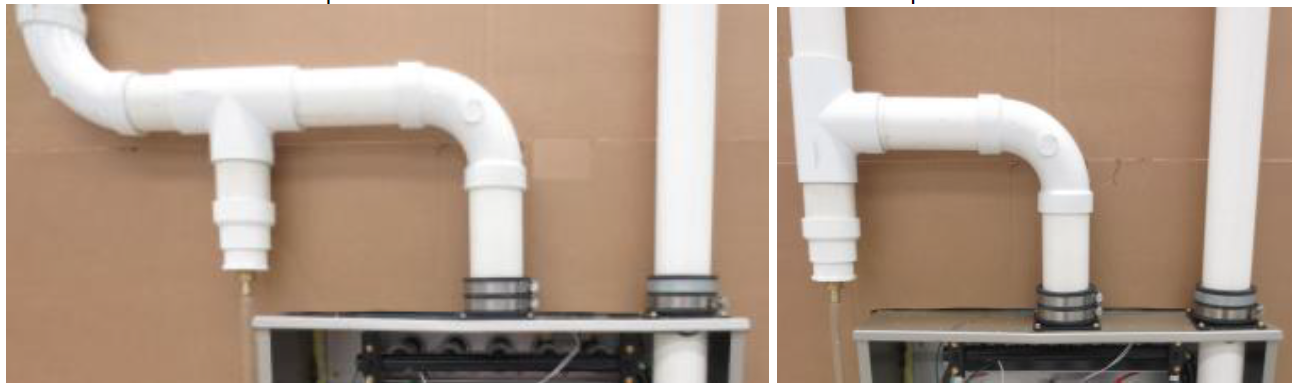
A field constructed drain can be added to existing combustion air pipe. The drain should be located as close to the air intake pipe adapter as possible.
The example shown below is for a 2-inch combustion air/vent system. Size the combustion air and vent pipes per the installation instructions. If a different diameter of combustion air and vent pipes are required, substitute the 2-inch fittings shown below for the required diameter pipe. The change in pipe diameter MUST be made it the vertical portion of the vent, as close to the furnace as practical.
In Summary:
Summary of Premature Gas Valve Failure Causes and Solutions
Issue:
Premature gas valve failure is often caused by home depressurization, which allows condensation from the intake pipe to drip onto the gas valve, leading to corrosion. This typically occurs during the cooling season but goes unnoticed until the heating season.
Causes and Solutions:
-
Home Depressurization – Ensure proper ventilation and seal furnace cabinets.
-
Improper Vent/Combustion System Design – Follow manufacturer guidelines for vent design and termination.
-
Unapproved Holes in Furnace Cabinet/Blower Shelf – Seal any unauthorized openings.
-
Unbalanced Duct System – Balance airflow to prevent pressure issues.
Condensation Prevention:
-
Condensation on the suction line signals poor sealing or insufficient insulation on the line.
-
To prevent condensation inside the combustion air pipe, maintain slight positive pressure in the home as recommended by ASHRAE 62.1.
-
Adding a field-constructed drain near the air intake adapter can help manage condensation buildup.
Key Tip: When adjusting pipe sizes, make the change in the vertical portion of the vent, close to the furnace.

