


 133
133
In this movement of better installs, better running and more efficient equipment, critical charging a piece of HVAC equipment is becoming the standard. Quite honestly, this should've been a standard across all levels of HVAC to be followed, since day one. Unfortunately the industry allowed us to get lazy and in a lot of cases, lucky.
What exactly is critical charging? Critical charging is the charging of a HVAC piece of equipment with the EXACT amount of refrigerant needed for it to work properly. For decades now, manufactures have held a standard of shipping an outdoor condenser or heat pump with the exact amount of refrigerant for 15ft of line set and the matched coil/evaporator. But what happens when we have 20 or even 40 feet of line set? Well, we must add some refrigerant obviously. How much you ask? Great question.
Before we answer with the correct methods, lets discuss how we USED to do it, and why it was not best practice. Generally, and more cases than not, a contractor would open up the service valves to release the charge, start up the equipment, and watch his pressures. Instead of waiting the required 15 minutes (its in the manual) he would then add refrigerant until his pressures "looked good" and the line set started sweating. If the head pressure was too high, it was generally related to a really hot day and that the equipment is "working hard" to cool the house down. We never really knew how much refrigerant was added. This was bad.
Incorrectly charging a piece of equipment can have many negative impacts:
- improper oil return
- liquid slugging (low super heat/too much liquid)
- high sub cooling (stacking refrigerant/too much liquid)
- high amp draw
- high super heat (not enough saturated vapor)
- low sub cooling (not enough liquid)
- poor system performance (not dehumidifying/cooling)
- short cycling equipment
As I stated before, we generally got lucky if the system worked and lasted.
So now lets get into how we actually should've charged that system. First off, before ANYTHING, airflow must be set and verified, yes even back in the good ol' days. 350-400 cfm per ton is target. Check this by checking blower ESP and the blower performance chart of the furnace or air handler (in the manual). Adjust blower speeds as needed to achieve, DO NOT leave the furnace/air handler set for factory default speed. In many cases this will not be the correct blower speed for AC/HP. Once we have verified that we are moving the correct CFM, we can then charge the system appropriately. This can depend on the liquid line size used. For 3/8 liquid line (industry standard) you will need to add .6oz of refrigerant per foot of extra line set past 15ft. Example: 35ft line set would require an additional 12oz of refrigerant. Once the correct amount is added, we can then start and monitor system performance for a minimum of 15 minutes. If everything is done correctly, the system should run out almost perfectly, and settle into steady state.
NOTE: in some cases, a minor charge adjustment may still be needed due to conditions or inaccurate test equipment/tools, and metering device type.
You will always need to monitor super heat and sub cooling during start-up, even through steady state. Then, take it to the next level with commissioning/verification. Using the proper tools you can then verify other things such as:
- Temperature Delta/split
- BTU content (if its a 2.5 ton, is it actually producing 2.5 tons?)
- SEER/EER/HSPF (electrical consumption)
- Humidity removal
Is the system performing the way the AHRI certificate states EX:
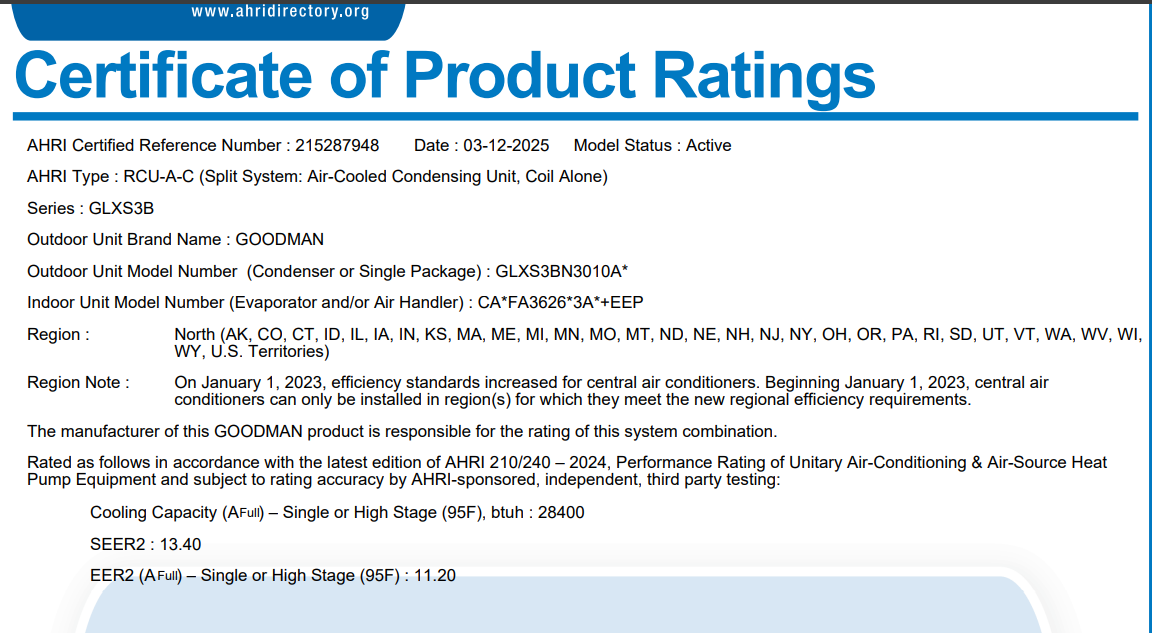
These are practices and guidelines we should've, and will be following for the future. As the equipment tolerances get tighter, so should our methods of service and commissioning. There are manufactures already standing by this method, Fujitsu, Daikin, Mitsubishi, and most likely others. If not, they will be soon to follow.
-HVAC Marksman
Marksman Minute

